Understand dental veneers, the options to discuss with a qualified clinician and what to confirm before planning a visit to Shiraz.
Key points
- Discuss your individual suitability, alternatives and risks with the treating clinician.
- Ask for written preparation and recovery instructions, including your medicines and follow-up.
- Confirm the healthcare facility, full costs and arrangements before booking travel.
On this page
- Composite Veneer in Iran
- Porcelain Veneer in Iran
- All inclusive Dentistry Packages in Iran
- What are dental veneers?
- What problems do dental veneers fix?
- Preparation session
- Fitting and bonding session
- Types of dental veneers
- Porcelain veneers
- Composite veneers
- Veneers vs. dental crowns
- Dental veneers aftercare
- What are some advantages of dental veneers?
- What are some disadvantages of dental veneers?
- A practical point for your care
- Planning treatment in Shiraz
- Sources
Composite Veneer in Iran
- Anesthesia: Local
- Clinic Stay: Not Needed
Porcelain Veneer in Iran
- Anesthesia: Local
- Clinic Stay: Not Needed
All inclusive Dentistry Packages in Iran
A deposit is an advance payment to secure a spot by the user after making an informed decision and agreeing to receive a service and cannot be refunded due to the user’s refusal to receive the service or cancellation for personal reasons.
In the event of a cancellation by the patient after arrival in Iran, the following amounts will be deducted from the total payment, and the remaining balance will be refunded:
- Cancellation after hospital admission and preparation for surgery: No refund will be issued.
Please note: If the cancellation is due to a newly diagnosed acute illness or emergency medical condition that was not disclosed by the patient on the pre-travel checklist, refunds will not be provided.
Hear about our dentistry patients’ experiences in Iran: They have so much to share.
Australian patient’s medical trip to
Iran for quality dental implants
One medical trip to Iran, two transformations:
Dental crowns and nose job
Smile makeover abroad:
Composite veneers in Iran
What are dental veneers?
Dental veneers, also called porcelain veneers, composite veneers or dental laminates, is a cosmetic dental treatment, covering your selected tooth or teeth with thin shells of porcelain, a medical grade ceramic, or composite. These thin shells will replace the tooth’s enamel, which is a natural protective layer on teeth.
Dental veneers give you natural looking teeth with the same visual characteristics, such as shape, light reflecting, color and length of an untouched and original tooth. Veneers can be compared, in terms of strength, to the natural tooth enamel.
Haven’t decided yet? Let us help you, it’s free
What problems do dental veneers fix?
- Damaged enamel
Some lifestyle habits such as smoking or drinking tea and coffee and even some genetic factors play role in wearing down the tooth enamel. Worn enamel affects the appearance of the teeth. By covering the frontal surface of teeth with laminates, the patients regain confidence and protect their teeth from further damage.
- Broken, cracked or chipped teeth
- Age-related teeth damage
As we age, our teeth lose their strength and are susceptible to breaking and cracking, which can also give them an uneven appearance.
- Genetically uneven, irregular shaped teeth
- Teeth with abnormal gaps and spaces between them
- Discolored teeth
When a discoloration cannot be fixed through tooth whitening, cosmetic dentistry such as porcelain veneering treatment would do a far better job.
- Dental misalignment
If the patient wants to straighten their teeth without braces, veneers can be beneficial.
Preparation session
In this session, the dentist trims the teeth and removes about 1 mm of enamel to reach the width of the porcelain veneer and a right height and size for placing the veneer. If the patient wants to use porcelain veneers on some but not all of his/her teeth, it’s better to do a brief whitening process on other surrounding teeth.
Fitting and bonding session
When the dental veneers are ready, the dentist temporarily places them on the patient’s teeth, in order to check their size, color and how they fit. If both the patient and dentist are satisfied with the result, the bonding phase starts.
Before permanently placing the veneers, the dentist thoroughly cleans the patient’s teeth. An acid substance is used to roughen the surface of teeth and veneers. A special cement is applied to them. Then, the veneers are fixed over the teeth.
In some occasions, the procedure is done under anesthesia, not because it’s painful, but because it might be hard for some patients to stay still for a long time.
In the end, the dentist removes the excess cement. The dentist also checks the alignment and how the teeth sit on each other when the mouth is closed, in other words, the “bite” is checked and corrected if necessary.
Types of dental veneers
There are two main types of dental veneers that can cover and restore your chipped, cracked, discolored, or uneven teeth perfectly. They are:
Porcelain veneers
Porcelain veneers are made of ceramic or porcelain. They are durable, stain-resistant, and natural-looking. Plus, they are designed only for one patient, and no two porcelain veneers for two different patients are the same.
Composite veneers
To tell whether the patients need porcelain or composite veneers and to determine the best choice of material for dental veneering, the patient must consult with a dentist.
Veneers vs. dental crowns
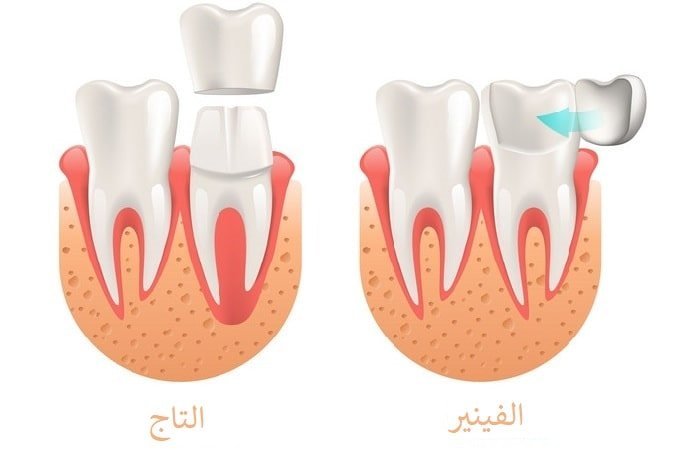
Dental crowns are the alternative for veneers. The difference is that the crown is suitable for a person who wants a more dramatic change of appearance, color, and shape of their teeth. While veneers cover the surface of a tooth, dental crowns are applied to cover a tooth completely.
Dental veneers aftercare
Regular brushing and flossing, as we normally do with our teeth, is highly necessary after getting porcelain veneers. The toothpaste you use must be a non-abrasive fluoride type of toothpaste. It’s also better to limit the use of tea, coffee, red wine, and other stain-causing foods and drinks.
What are some advantages of dental veneers?
These are some advantages in getting veneers:
- Natural looking teeth
It means that the light is reflected off the dental veneers as it does off natural teeth. So, it’s as translucent as natural teeth’s enamel. This is because it reflects the layer below the surface of the porcelain veneer.
- Stain resistance
The stains on the veneers can be wiped off easily.
- Durability
- Quick results
Not having to wait a few months to see the results of this beauty treatment is one of its most obvious advantages.
What are some disadvantages of dental veneers?
Dental veneers have some drawbacks, which are as follows:
- Damage possibility
Although porcelain veneers are known to remain strong for years ahead, there’s always a chance of breakage, falling off or chipping. In the case of falling off, it can most probably be reattached by the dentist. If it does break in any way, the patient must go through the whole process all over again, which might not be pocket-friendly.
- Irreversible process
Once the veneers are bonded, there’s no turning back to how it was before the preparation and application.
- Teeth sensitivity
As a part of the enamel is removed during the teeth preparation, the teeth will be more sensitive to hot and cold foods or drinks after the procedure.
A practical point for your care
Before an operation, the pre-assessment team should review your health, previous tests and all medicines and supplements. Ask for written instructions on medicines, eating, drinking and aftercare that apply to your planned procedure.[1]
Planning treatment in Shiraz
Ask SanaMedTour about the appropriate specialty, appointment arrangements and practical support for your visit. The treating clinician confirms the diagnosis, treatment options, suitability and follow-up after assessment.
Request an itemised written quote identifying the clinician, facility, tests, treatment, medicines, reviews and any accommodation or transfers included.
Sources
[1] NHS: Preparing for surgery — supports the individual-care planning note above. ↑ Back to text
Editorial adaptation: 25 October 2026. General information for planning and discussion; your clinician’s individual instructions take priority.