Understand oculoplastic surgery, the options to discuss with a qualified clinician and what to confirm before planning a visit to Shiraz.
Key points
- Discuss your individual suitability, alternatives and risks with the treating clinician.
- Ask for written preparation and recovery instructions, including your medicines and follow-up.
- Confirm the healthcare facility, full costs and arrangements before booking travel.
On this page
If you’re searching for a place to get a safe oculoplastic surgery done there at a low price, Iran has much to offer. To help you understand what it is like to undergo your surgery in this country, here is all you need to know about oculoplastic surgery in Iran.
Having Experienced a Failed Plastic Surgery,
Pakistani Girl Chooses Iran for a Perfect Revision
Swiss Patient Trusts Iran for
His Cosmetic Surgery Among All Destinations
A Smooth Medical Trip to Iran
for an Amazing Transformation
Australian Lady Saves Money Having
Successful Plastic Surgeries in Iran
Croatian Girl’s Careful Research Led Her
to Iran for an Amazing Plastic Surgery
A Medical Trip to Iran Is Worth It as You Enjoy
Both Great Surgery Results and Low Prices
Haven’t decided yet? Let us help you, it’s free
What is oculoplastics?
Oculoplastic surgery or oculoplastics generally covers a variety of surgical procedures and treatments for correction of eyelid abnormalities, tear duct problems, and orbital diseases. So, this surgery addresses the deformities of the structure around the eyes and does not address eyeballs. Cosmetic and reconstructive procedures of the eye fall into this category as well.
Oculoplastic surgery is performed on people of all ages for a variety of reasons. Some types of oculoplastic surgeries are medically necessary. For instance, certain eyelid issues affect a person’s appearance as well as his or her eye vision and health.
Eyelid surgery or blepharoplasty (removing droopy skin around eyes), tear duct surgery, orbital surgery, entropion, and ectropion repair, pediatric oculoplastic surgery, eyebrow and forehead lift, facelift and implants are some of the main types of oculoplastics.
Oculoplastic surgery can restore the fresh-looking eyes you once had.
TYPES OF OCULOPLASTIC TREATMENTS
Depending on the issue and whether the treatment is for cosmetic or medical purposes, there are two approaches for oculoplastics:
- Non-surgical treatments:
They include laser skin treatments, chemical peel techniques, home skin care regimens, and facial filler injections with the intention of reducing facial wrinkles.
- Surgical treatments:
They consist of a wide range of procedures, including eyelid surgery for removing excess skin, muscle or fat, eyelid reconstruction for eliminating eyelid tumors, eyebrow and forehead lifting, facial rejuvenation, and implants.
It also involves commonly performed oculoplastic treatments which correct eyelids that fold inward or outward and procedures that correct drooping of the upper or lower eyelid. In addition, oculoplastic surgery includes procedures addressing tear ducts which restores the flow of tears, also, orbital surgery for managing eye disorders and traumas.
How is oculoplastic surgery done in Iran?
Most oculoplastic surgeries can be performed under local anesthesia and some with intravenous sedation. Depending on the type of surgery, an oculoplastic surgeon starts with making one or some small incisions in different areas of either face, eyebrow or skull.
For instance, eyelids surgery is done through lines of eyelids. Tear duct surgery is done through the nose or in the corner of the eye.
In the next step, the surgeon may separate the skin from the underlying tissue to remove the excess fat, skin or muscle. In case of tear duct surgery, a small opening is created from the blocked tear nasal duct, directly into the nose.
For eyebrow and forehead lifting, the incisions are made in the scalp to remove the excess fat. For facial lift, the incision is made around the ear for accessing the muscle, then the skin is lifted and the underlying muscle and connective tissue are repositioned and tightened.
The situation is more complicated for orbital surgery. Occasionally, large incisions are needed and may result in visible scars. Engaged or damaged tissues are removed as necessary or repaired carefully while eye function and vision are preserved.
After the positioning and alignment were done in all sorts of oculoplastics, if needed, the sutures or metal clips are placed.
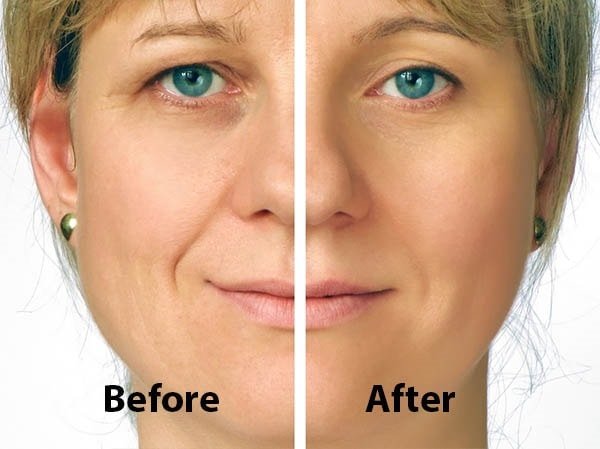
See how oculoplastic surgery can change the way you look!
Oculoplastic surgery recovery
You may experience some level of pain, discomfort, bruising, and swelling during the recovery time. Your vision may be blurry for the first few days after the surgery.
In general, the recovery is usually not extensive. Oculoplastic surgeries are free of complications, and most patients have reported little discomfort.
Do you know how much your eyes contribute to your beauty?
Oculoplastics post-operative care
Post-surgery care depends on the type of oculoplastic procedure that the patient undergoes. He or she will be provided with sufficient instructions to follow at home. However, the following instructions are necessary after the surgery:
- Relaxation and enough rest for the first few days after the surgery,
- Applying cold compresses on the eyelids when advised by the surgeon,
- Minimal activity to help with the healing and minimizing the swelling, bruising, discomfort, and post-operative complications, and
A practical point for your care
Before an operation, the pre-assessment team should review your health, previous tests and all medicines and supplements. Ask for written instructions on medicines, eating, drinking and aftercare that apply to your planned procedure.[1]
Planning treatment in Shiraz
Ask SanaMedTour about the appropriate specialty, appointment arrangements and practical support for your visit. The treating clinician confirms the diagnosis, treatment options, suitability and follow-up after assessment.
Request an itemised written quote identifying the clinician, facility, tests, treatment, medicines, reviews and any accommodation or transfers included.
Sources
[1] NHS: Preparing for surgery — supports the individual-care planning note above. ↑ Back to text
Editorial adaptation: 25 October 2026. General information for planning and discussion; your clinician’s individual instructions take priority.