Understand dental bridges, the options to discuss with a qualified clinician and what to confirm before planning a visit to Shiraz.
Key points
- Discuss your individual suitability, alternatives and risks with the treating clinician.
- Ask for written preparation and recovery instructions, including your medicines and follow-up.
- Confirm the healthcare facility, full costs and arrangements before booking travel.
On this page
- What are dental bridges?
- What are the benefits of bridges?
- Dental bridge procedure in Iran: how it’s done?
- Types of dental bridges
- Traditional bridges
- Cantilever bridges
- Maryland or resin-bonded bridges
- Implant-supported bridges
- Dental bridges vs. implants: which one is better?
- Dental bridge aftercare
- A practical point for your care
- Planning treatment in Shiraz
- Sources
High-quality dental bridges at the best dental clinics in Iran offered at decent prices.
Are you looking for affordable dental bridges abroad? you’re not alone in this. Each year, thousands of people are heading off to various countries to get their dental treatments done at a better price. Some of them choose Iran over other destinations as they heard of the great expertise of Iranian dentists and the affordable cost of dental procedures.
Hear about our dentistry patients’ experiences in Iran: They have so much to share.
Australian patient’s medical trip to
Iran for quality dental implants
One medical trip to Iran, two transformations:
Dental crowns and nose job
Smile makeover abroad:
Composite veneers in Iran
What are dental bridges?
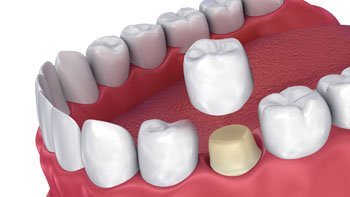
Dental bridges, as the name suggests, bridge or fill in space between two crowns, implants or teeth. A dental bridge consists of two crowns or teeth and a false tooth in between. The false tooth, otherwise known as ‘pontic’, acts as a bridge, connecting the two adjacent crowns or teeth.
A dental bridge consists of two crowns or teeth and a false tooth in between.
What are the benefits of bridges?
- Improve teeth appearance and functionality,
- Empower a damaged tooth/implant,
- Restore alignment of the dental occlusion (bite): Gaps left by missing teeth can cause the remaining teeth to shift, which can result in a malocclusion (bad bite), imbalance or even gum diseases; and
- Span space where the tooth is missing.
Dental bridge procedure in Iran: how it’s done?
In the first session, the dentist prepares the teeth for receiving the bridge. To this end, the adjacent teeth, known as abutment teeth, are shaped by filing down. Then, the mold is made and sent to the laboratory.
In the second session, the bridge will be placed and fixed on the teeth/crowns. Then, the bite will be checked and corrected if required.
Depending on the type of the bridge, it will be secured in place using different supports. This will be explained more precisely in the next section.
See the four steps of a dental bridge procedure in Iran!
Types of dental bridges
Dental bridges come in four main types: traditional, cantilever, Maryland, and implant-supported.
Traditional bridges
These bridges are made of porcelain-fused-to-metal or ceramic. They are the most commonly used bridges. When using traditional bridges, the bridge is placed and cemented to the natural teeth which were prepared beforehand.
They are durable and feel natural. However, when the adjacent teeth are not damaged, the dentist has to remove layers of enamel to create room for attachment of the bridges. This is regarded as the main drawback of traditional bridges.
Cantilever bridges
Cantilever bridges are made of porcelain or ceramics, just like traditional ones. In these bridges, only one adjacent tooth in one side of the fake tooth is manipulated and trimmed. So, this option works for those who only have one damaged tooth with a gap next to it.
Maryland or resin-bonded bridges
Maryland bridges are made of porcelain, porcelain-fused-to-metal, or plastic. The false tooth is bonded to only one adjacent tooth using resin, metal, and porcelain wings.
With this type of bridges, the adjacent teeth will not be affected and filed down. However, they’re not as strong as traditional and cantilever bridges, as the material holding the bridge may get loose under the biting pressure.
Implant-supported bridges
When the adjacent teeth are missing and replaced with dental implants, the bridge is supported and secured in place by those implants. These bridges do not get loose easily and feel as comfortable as your natural teeth. To get this type of bridges, you first need to receive implants and then go for a dental bridge procedure.
See the difference between a traditional bridge and an implant-supported bridge!
Dental bridges vs. implants: which one is better?
Both implants and bridges replace missing tooth/teeth. However, they do not bring the same advantages and disadvantages.
While you can improve your teeth appearance and functionality by getting either an implant or a dental bridge, the situation would be different with each of them. A dental implant does not affect the surrounding teeth, and it can last for a lifetime. Bridges, however, impose pressure on the surrounding teeth.
To get a dental bridge, the enamel of adjacent teeth would be manipulated. This is not desired by many, considered as a disadvantage. However, this procedure is way easier and cheaper than getting an implant.
To get a dental implant, the patient needs to undergo surgery. The patient also needs to have sufficient jaw bone to receive the implants. Therefore, not everyone is the right candidate for this procedure.
All in all, to determine whether an implant or a bridge is the right option for you, you need to consult with a dentist.
Dental bridge aftercare
Bridges are fixed in place using local anesthesia. When the local anesthetic gradually wears off the area, the bridge feels comfortable in your mouth.
After the procedure, you can easily chew and eat without having problems, but you also need to make some effective changes to your dental care routine.
You can also ask your dentist about the routine care to make sure you are taking care of them fully and to prevent spending much of your budget again on solving the problem with a bad bridge.
A practical point for your care
Before an operation, the pre-assessment team should review your health, previous tests and all medicines and supplements. Ask for written instructions on medicines, eating, drinking and aftercare that apply to your planned procedure.[1]
Planning treatment in Shiraz
Ask SanaMedTour about the appropriate specialty, appointment arrangements and practical support for your visit. The treating clinician confirms the diagnosis, treatment options, suitability and follow-up after assessment.
Request an itemised written quote identifying the clinician, facility, tests, treatment, medicines, reviews and any accommodation or transfers included.
Sources
[1] NHS: Preparing for surgery — supports the individual-care planning note above. ↑ Back to text
Editorial adaptation: 25 October 2026. General information for planning and discussion; your clinician’s individual instructions take priority.