Understand angioplasty, the options to discuss with a qualified clinician and what to confirm before planning a visit to Shiraz.
Key points
- Discuss your individual suitability, alternatives and risks with the treating clinician.
- Ask for written preparation and recovery instructions, including your medicines and follow-up.
- Confirm the healthcare facility, full costs and arrangements before booking travel.
On this page
- What condition can angioplasty treat?
- How do I know if I need angioplasty?
- How is balloon angioplasty performed?
- Is stent placement necessary during angioplasty?
- How to prepare for angioplasty in Iran
- Angioplasty recovery tips
- Angioplasty risks and complications
- A practical point for your care
- Planning treatment in Shiraz
- Sources
Having Experienced a Failed Plastic Surgery,
Pakistani Girl Chooses Iran for a Perfect Revision
A Smooth Medical Trip to Iran
for an Amazing Transformation
Swiss Patient Trusts Iran for
His Cosmetic Surgery Among All Destinations
Australian Lady Saves Money Having
Successful Plastic Surgeries in Iran
Croatian Girl’s Careful Research Led Her
to Iran for an Amazing Plastic Surgery
A Medical Trip to Iran Is Worth It as You Enjoy
Both Great Surgery Results and Low Prices
Haven’t decided yet? Let us help you, it’s free
What condition can angioplasty treat?
Angioplasty is a treatment intended to fix narrowed or clogged arteries. Arteries are essential blood vessels throughout the body that can provide oxygen for bodily organs. Different types of arteries include:
- Coronary arteries: Arteries that supply blood to the heart
- Carotid arteries: Arteries that supply blood to the brain
- Renal arteries: Arteries that supply blood to the kidneys
Various substances in the blood can accumulate over the years and form plaque on the inner walls of the vessel. When the artery is narrowed by plaque buildup, blood flow is hindered and vessels cannot carry adequate oxygen to the heart or other vital organs. The condition is called clogged-artery or atherosclerosis and might result in life-threatening disorders such as stroke or heart attack.
How do I know if I need angioplasty?
Usually, atherosclerosis does not show initial symptoms. When the symptoms do occur, it means the plaque has grown so much that it restricts the blood flow. Symptoms could vary depending on which arteries in the body are clogged. For instance, a narrowed carotid artery can lead to numbness, headache, weakness, difficulty breathing, or paralysis. Whereas, common symptoms of coronary artery blockage include chest pain, coughing, or vomiting.
Due to factors such as genetics, the risks are higher for some people to develop cardiovascular diseases. If the condition runs in your family too, you can benefit from an early diagnosis by taking certain tests:
- Blood test (Cholesterol screening)
- Chest X-ray
- Echo
- Ultrasound
- MRI
- CT scan
- Angiogram
How is balloon angioplasty performed?
Once the catheter is inside the artery, the surgeon guides it to the blockage. This can be performed by injecting a particular liquid dye into the bloodstream to help the surgeon find the blockage through X-ray imaging. This is the same method performed for diagnosis during angiography.
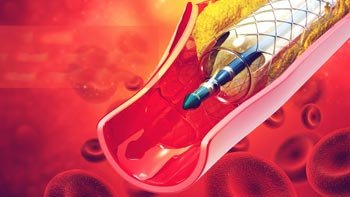
The catheter is a thin wire with a small balloon on its tip. The balloon is initially deflated and is inflated when it reaches the blockage. By expanding it will press the plaque against the inner walls of the vessel broadening the artery.
Is stent placement necessary during angioplasty?
In most cases, angioplasty is performed along with stent placement. That is, leaving a small wired mesh tube called a stent in the clogged area of the artery. While balloon angioplasty can effectively prop the artery open by pressing the plaque against the inner walls of the vessel, stent placement can keep the artery open by adhering to the vessel’s walls and preventing the artery from narrowing.
It is possible to perform angioplasty without stent placement. For most patients, however, stents can yield better results. The decision whether to use stents during angioplasty is entirely up to your cardiologist who is well-informed about your condition and can provide the best solution based on his or her experience.
How to prepare for angioplasty in Iran
- Before your trip to Iran, be sure to pack enough clothing suitable for the weather. It is recommended to pack as light as possible for your own convenience.
- The doctor might need to see some test results before the surgery. You can either take the tests prior to coming to Iran or have us take care of the necessary measures to set you up with appointments for tests and evaluations.
- You might want to arrange for someone to accompany you during the journey. Upon your arrival in Iran, you will have an on-call interpreter accompanying you and a medical expert supervising each and every step of your journey. Yet, having an acquaintance next to you can bring a sense of comfort.
Angioplasty recovery tips
- Your cardiologist will probably prescribe a set of medication instructions. This is to help prevent recurring heart problems and also boost healing. You should try to stick to the schedule and take the medications as instructed.
- Your post-surgery diet can be extremely important. Consider adding nuts, whole grains, berries, and other foods that can enhance your heart’s performance after the surgery. You should also decrease your salt and fat intake.
After the recovery, it is recommended to make some lifestyle changes to your daily routine to promote the long-term results of angioplasty. Lifestyles that include smoking and being overweight can increase the risks of recurring heart conditions. Some tips to help you maintain a healthy cardiovascular system are:
- Lose excess weight
- Engage in regular physical activities like running or swimming
- Quit smoking
Angioplasty risks and complications
Angioplasty advantages can certainly outweigh its risks. Some very rare but potential risks include:
- Blood clots forming within the stent
- Bleeding
- Artery damage
During angioplasty, a thin tube called a catheter is inserted through a small incision in your leg or arm. You might feel some pressure due to the movement of the catheter but you shouldn’t experience any sharp pain.
A practical point for your care
Before an operation, the pre-assessment team should review your health, previous tests and all medicines and supplements. Ask for written instructions on medicines, eating, drinking and aftercare that apply to your planned procedure.[1]
Planning treatment in Shiraz
Ask SanaMedTour about the appropriate specialty, appointment arrangements and practical support for your visit. The treating clinician confirms the diagnosis, treatment options, suitability and follow-up after assessment.
Request an itemised written quote identifying the clinician, facility, tests, treatment, medicines, reviews and any accommodation or transfers included.
Sources
[1] NHS: Preparing for surgery — supports the individual-care planning note above. ↑ Back to text
Editorial adaptation: 25 October 2026. General information for planning and discussion; your clinician’s individual instructions take priority.