Understand herniated disc surgery, the options to discuss with a qualified clinician and what to confirm before planning a visit to Shiraz.
Key points
- Discuss your individual suitability, alternatives and risks with the treating clinician.
- Ask for written preparation and recovery instructions, including your medicines and follow-up.
- Confirm the healthcare facility, full costs and arrangements before booking travel.
On this page
Iran’s orthopedic advances along with the incredible prices it offers to foreign patients has given the country comparative advantages over other destinations. Herniated disc surgery is one of the procedures medical tourists seek in Iran. If you need to find a qualified doctor for your treatment, fill in the contact form, and scroll down to learn all you should know about herniated disc surgery in Iran.
Having Experienced a Failed Plastic Surgery,
Pakistani Girl Chooses Iran for a Perfect Revision
A Smooth Medical Trip to Iran
for an Amazing Transformation
Swiss Patient Trusts Iran for
His Cosmetic Surgery Among All Destinations
Australian Lady Saves Money Having
Successful Plastic Surgeries in Iran
Croatian Girl’s Careful Research Led Her
to Iran for an Amazing Plastic Surgery
A Medical Trip to Iran Is Worth It as You Enjoy
Both Great Surgery Results and Low Prices
Haven’t decided yet? Let us help you, it’s free
There’s a series of bones on your spine, separated by a number of discs that you should know how to take care of! Otherwise, as you age or in case of an injury, you may be at risk of disc herniation or rupture.
If you’re suffering from disc herniation and your doctor advise you to go with the surgery, Iran can be a reliable place to travel for a less expensive surgical treatment with zero waiting time.
For foreign patients who are not disturbed by what’s told on the big media about Iran, the country compensates with effective yet affordable medical services. If you don’t have a good grasp of this treatment and how it’s done in Iran, read on to discover more.
Overview
Spinal discs, also called vertebral discs, are thin cushioning layers positioned between each vertebra (bone) in the spine. They are shock absorbers and do not let the bones rub against each other.
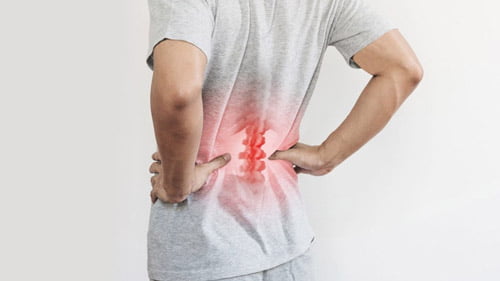
Spinal disc may degenerate and malfunction sometimes, causing you feel pain in either your neck area, your lower back or one or both legs.
This condition is called disc herniation or rupture. People are unable to live their normal life when one of their discs is herniated. In this condition, the gel-like matter of a disc (Nucleus pulposus) leaks into the neighboring area, i.e. the spinal canal. Your disc is bulged and ruptured, which results in pain, weakness, numbness, and limited range of motions.
As the disc degenerates, the inner portion of it can leak into the spinal cord. This disc is called a bulging or herniated disc.
How herniated disc is treated?
In most cases, the patient can be treated non-surgically. Depending on the condition and the herniation extent, the doctor may prescribe specific medicines or physiotherapy.
The doctor may ask you to take diagnostic tests including X-ray and CT scan. Such tests provide clear images of the damaged disc and its surrounding tissue and nerve.
Types of herniated disc surgeries
A herniated disc can be treated through various types of surgeries. The most common ones are listed below:
Discectomy
Discectomy refers to the procedure of removing the herniated part of the disc from your spine. So, there will be no more pressure on the nerves in your spinal cord.
If the damaged disc locates in the lower or lumbar spine, the surgery is called lumbar discectomy or lumbar spine surgery. In this procedure, the surgeon accesses the ruptured disc by making incision on the back of your spine. The bulging part is then cut and taken out.
The surgery can also treat spinal stenosis. Spinal stenosis is a condition when the spine is compressed, causing you pain and immobility.
Microdiscectomy or open discectomy
When the surgery is done using a special microscope to see the inside of your body, it is referred to as microdiscectomy. When the surgeon does not use such tool and makes a large cut to observe the slipped disc directly, the procedure is called open discectomy.
Depending on the patient’s condition and the surgeon’s proficiency, your surgeon may decide to perform either methods.
Percutaneous discectomy
In this procedure, a tool enters the body and reduces the size of herniation through heating and scraping. The surgeon cuts the ruptured disc out or burns the disc using laser beam. This surgery is less common and less effective, compared to other approaches.
Laminotomy
Laminotomy refers to the procedure of manipulating lamina to help relieve the nerve roots which have been pressed due to disc herniation. In this procedure, a certain area of the lamina is removed. Lamina is the back part of the vertebra (backbone).
In some cases, the surgeon may remove the whole lamina of the disc and its attached tissue. This procedure is called laminectomy, and cannot be done on all patients.
Disc replacement
When a single disc is largely degenerated and diseased, it can be removed and replaced with an artificial disc. The artificial disc or implant is a metal or plastic-like device which acts as a normal disc.
Artificial disc replacement is done under general anesthesia and the incision is made on the abdomen. Then, the surgeon removes the disc and the disc implant is inserted into the place.
Sometimes, only a part of the disc, i.e. the gel-like center of the disc or nucleus, needs to be replaced. In this condition, the outer part is not removed and the procedure is called disc nucleus replacement.
Spinal fusion
A more invasive procedure, spinal fusion fuses two bones in the spine, eliminating the diseased disc and filling in the space between the two vertebras.
This procedure not only treats a degenerated disc, but also is recommended to patients suffering from spinal stenosis, damaged or fractured vertebra, kyphosis, scoliosis, etc.
In this procedure, the surgeon uses a bone graft taken from the patient or a donor and puts it in the empty space of a disc. If the disc needs to be removed before spinal fusion, a discectomy will be done.
The surgery diminishes severe pain and improves the patient’s quality of life. Yet, as it merges the two bones, it results in the limited movements of the treated area.
Should I have herniated disc surgery in Iran?
Traveling for receiving affordable medical care is not something you haven’t heard about so far. As many as 20-24 million patients traveled outside their home countries last year, seeking less expensive healthcare.
High-quality healthcare: For Iran, this market becomes more attractive as the country excels among the Middle Eastern countries in terms of the quality of doctors, hospitals, and medical facilities.
The country has achieved significant recognition in the field of orthopedic treatments. Now, Iran’s home to a number of pioneering orthopedists and neurosurgeons who have attended prestigious universities in western countries.
What to expect after disc hernia surgery in Iran?
During this time, you may feel pain and discomfort, which will be eased by taking prescribed medications. You may also be recommended to follow physiotherapy exercises.
A practical point for your care
Before an operation, the pre-assessment team should review your health, previous tests and all medicines and supplements. Ask for written instructions on medicines, eating, drinking and aftercare that apply to your planned procedure.[1]
Planning treatment in Shiraz
Ask SanaMedTour about the appropriate specialty, appointment arrangements and practical support for your visit. The treating clinician confirms the diagnosis, treatment options, suitability and follow-up after assessment.
Request an itemised written quote identifying the clinician, facility, tests, treatment, medicines, reviews and any accommodation or transfers included.
Sources
[1] NHS: Preparing for surgery — supports the individual-care planning note above. ↑ Back to text
Editorial adaptation: 25 October 2026. General information for planning and discussion; your clinician’s individual instructions take priority.