LASIK reshapes the cornea to reduce dependence on glasses or contact lenses for suitable refractive errors. A full eye assessment comes before choosing a technique or booking an operation.
Key points
- Check that your prescription and eye health are suitable.
- Compare LASIK with PRK, lens-based options or continued glasses when appropriate.
- Discuss dry eye, glare, night vision and the possibility of still needing glasses.
- Plan the review schedule and return travel with the eye team.
On this page
Who may be suitable?
Assessment considers prescription stability, corneal shape and thickness, dry eye, other eye conditions, medicines and general health. Pregnancy, conditions affecting healing and certain eye disorders may change the advice. LASIK is not an option for everyone.[1]
What does LASIK involve?
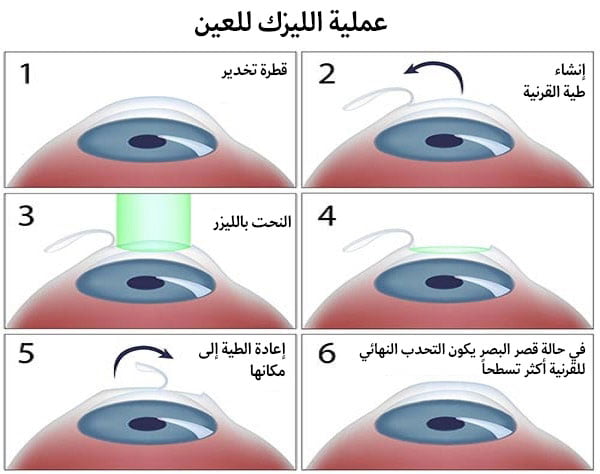
A thin corneal flap is created with a femtosecond laser or a mechanical device, depending on the planned technique. An excimer laser then reshapes the underlying corneal tissue. The surgeon explains the method, anaesthesia and alternatives for your eyes.
Benefits, limitations and risks
The aim is to reduce reliance on glasses, not to promise perfect or permanent vision at every distance. Possible problems include dry eye, glare, halos, under- or over-correction, flap problems, infection and loss of visual quality. Some people still need glasses or further treatment.[2]
Before and after the procedure
Ask when to stop wearing contact lenses for accurate measurements and which medicines or drops to use. Do not change prescribed treatment without instructions. Arrange transport after the procedure and follow the clinic’s protection, hygiene, activity and review plan.
Costs and travel planning
Confirm whether the quote covers one eye or both, which tests and technology are included, and the charges for medicines and reviews. Ask the surgeon when you can safely return to work, drive and travel; do not use an online timetable as personal clearance.
Common questions
Can everyone have LASIK?
No. Corneal measurements, eye disease, prescription stability and health factors determine whether LASIK or an alternative is suitable.
Will I never need glasses again?
That cannot be guaranteed. Residual refractive error, age-related near-vision changes and other eye conditions can mean glasses are still needed.
Planning your visit to Shiraz
Ask about the appropriate specialty, appointment details and practical services you need. Your treating clinician confirms the diagnosis, suitability, treatment and follow-up after assessment.
Sources
[1] FDA: When is LASIK not for me? · ↑ Back to text
[2] FDA: Risks and choosing a refractive surgeon · ↑ Back to text
Editorial update: 25 October 2026. This guide supports discussion and planning; follow the treating team’s individual instructions.