Understand orthodontics and dental braces, the options to discuss with a qualified clinician and what to confirm before planning a visit to Shiraz.
Key points
- Discuss your individual suitability, alternatives and risks with the treating clinician.
- Ask for written preparation and recovery instructions, including your medicines and follow-up.
- Confirm the healthcare facility, full costs and arrangements before booking travel.
On this page
No more smiling with your mouth closed!
Get your teeth straight and well-positioned with our dental braces and Invisalign services offered at the best dental clinics in Iran.
Hear about our dentistry patients’ experiences in Iran: They have so much to share.
One medical trip to Iran, two transformations:
Dental crowns and nose job
Australian patient’s medical trip to
Iran for quality dental implants
Smile makeover abroad:
Composite veneers in Iran
What is orthodontics?
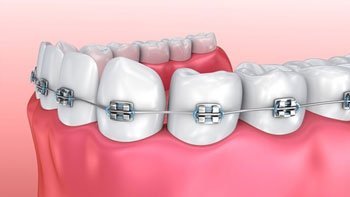
Orthodontics refers to a dental specialty dealing with malpositioned teeth and jaws. Also called orthodontia and dentofacial orthopedics, orthodontics involves using appliances like braces for a temporary period to help your teeth move to the right position.
This procedure is regarded as one of the most efficient solutions to correct a bad bite. Accordingly, it’s not only a cosmetic treatment to improve your appearance, but also a medical-dental treatment for the prevention of oral diseases.
When are dental braces needed?
- You have improperly-positioned, crowded and crooked teeth. In this case, you need to get braces, otherwise, they cause tooth decay as it is impossible for a person to brush them completely. It also increases the risk of head, neck, shoulder, and back pain as a result of imposing more pressure on chewing muscles.
- You’ve got malocclusion or bad bite. This occurs when: the upper teeth settle too far forward over the lower teeth (overbite), the lower teeth come too far forward (underbite), there left a space between upper and lower teeth when biting (open bite), or one of the upper teeth does not stand slightly in front of the lower teeth (crossbite).
- Your disorderly teeth cause breathing and speaking problems, as they prevent lips from properly getting closed.
- Your crooked teeth have negatively affected your smile and appearance and you feel less self-confident.
- There’s an undesirable gap between your teeth.
How is orthodontics performed in Iran?
The procedure of getting dental braces consists of three steps. They are the examination process, getting braces, and monthly check-ups.
To get your dental braces in Iran, you need to go through the first step in your home country. After visiting an orthodontist, they ask you to have dental x-ray, plaster model of your teeth, dental photographs, and a clinical exam.
Using these prerequisites, your orthodontist in Iran determines the duration of your treatment and the type of your devices. Then, the orthodontist puts your dental devices/braces in your mouth and tighten and fix them in place.
Regular visits are needed afterward in order for your dentist to check the progression of your treatment. When your dentist approves, your treatment is over and the devices are removed.
Different types of orthodontic appliances
Fixed appliances are braces, special appliances, and fixed space maintainers. These devices are attached to the teeth and are used to put tension on your teeth to get them in line.
Removable appliances are aligners, removable space maintainers, splints, lip and cheek bumpers, palatal expanders, removable retainers, and headgears. They are also attached to the teeth but shall be removed when eating, brushing, and flossing.
There is also a kind of transparent braces known as clear aligners often Invisalign that have the same function as regular braces but are invisible and are more comfortable and better-fitting.
Which type of braces works better?
Fixed devices like dental braces bring more effective results. They are used in patients who need more teeth adjustments. They also need more care as there’s always something bonded to your teeth.
Removable devices are used when less correction is required. They are often used to help you keep your teeth in line after your teeth are back in place using dental braces. Depending on your condition and preference, your orthodontist will determine which type of appliances is better for you.
What to expect after getting dental braces?
After getting braces, you may experience some levels of pain or discomfort for a few days. During this period, you may find it difficult to eat hard foods. This mild pain may reoccur whenever you get through an adjustment. However, rest assured that it won’t hurt too much or too long.
In order to maintain the health of your teeth after getting braces, make sure that you brush them carefully after each meal and before going to bed. Floss at least once a day, and visit your dentist regularly.
A practical point for your care
Before an operation, the pre-assessment team should review your health, previous tests and all medicines and supplements. Ask for written instructions on medicines, eating, drinking and aftercare that apply to your planned procedure.[1]
Planning treatment in Shiraz
Ask SanaMedTour about the appropriate specialty, appointment arrangements and practical support for your visit. The treating clinician confirms the diagnosis, treatment options, suitability and follow-up after assessment.
Request an itemised written quote identifying the clinician, facility, tests, treatment, medicines, reviews and any accommodation or transfers included.
Sources
[1] NHS: Preparing for surgery — supports the individual-care planning note above. ↑ Back to text
Editorial adaptation: 25 October 2026. General information for planning and discussion; your clinician’s individual instructions take priority.