Understand reconstructive burn surgery, the options to discuss with a qualified clinician and what to confirm before planning a visit to Shiraz.
Key points
- Discuss your individual suitability, alternatives and risks with the treating clinician.
- Ask for written preparation and recovery instructions, including your medicines and follow-up.
- Confirm the healthcare facility, full costs and arrangements before booking travel.
On this page
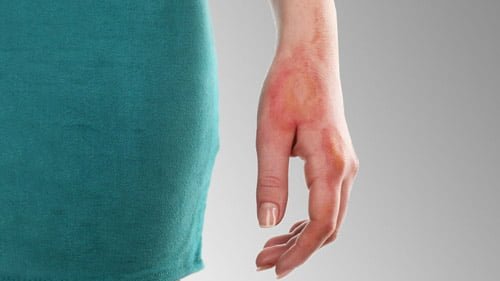
Reconstructive burn surgery is aimed at addressing the functional or aesthetic issues caused by burn injuries.
Reconstructive burn surgery in Iran is widely performed by plastic and reconstructive surgeons for patients complaining of visible burn scars that have affected their appearance and/or bodily functions.
One of the most common types of physical damages and scars is burns. Fortunately, most burn cases are minor health issues and can be treated easily at home or with an emergency visit (first-degree burns). But sometimes burns are serious and the heat damages deeper layers of skin (second, third, or fourth-degree burns).
These cases may even be life-threatening and need more extensive treatments. Other than being life-threatening, some burn incidents may alter a person’s lifestyle by leaving an undesirable mark or scar on their skin.
Thanks to advances in medicine and medical technology, nowadays plastic surgeons can reduce your burn marks and scarring and restore the appearance of your body to some extent. They employ a wide range of techniques to reconstruct the burned skin and tissue and help you get back to your normal body shape.
Having Experienced a Failed Plastic Surgery,
Pakistani Girl Chooses Iran for a Perfect Revision
Swiss Patient Trusts Iran for
His Cosmetic Surgery Among All Destinations
A Smooth Medical Trip to Iran
for an Amazing Transformation
Australian Lady Saves Money Having
Successful Plastic Surgeries in Iran
Croatian Girl’s Careful Research Led Her
to Iran for an Amazing Plastic Surgery
A Medical Trip to Iran Is Worth It as You Enjoy
Both Great Surgery Results and Low Prices
Haven’t decided yet? Let us help you, it’s free
Reconstructive burn surgery techniques and options
Plastic and reconstructive surgeons employ a wide range of surgical techniques to restore the burned tissues, at least partially. The surgeon recommends the best option for each case depending on the type of injury and other factors. Commonly used burn reconstruction surgery options include skin grafts, skin flaps, tissue expansion, microsurgery, and artificial skins.
Skin graft
The most common technique for burn repair surgery is skin grafting. Skin grafting is a reconstructive technique used to treat skin loss caused by any type of injury or disease, including burns. It involves removing healthy skin from other parts of the body and transplanting it to the damaged area.
There are two types of skin graft: split-thickness, and full-thickness grafts. In split-thickness skin grafting, only a few layers of the outer skin are removed and transplanted while in full-thickness skin graft all the layers of the skin (dermis) are used for transplantation.
How is skin grafting done?
The surgeon uses an instrument called ‘dermatome’ for harvesting skin from the donor site, which is usually a part of the body that is often invisible, such as the inner thighs. After removing the skin, the donor site is dressed to prevent infection. The skin is then put on the recipient area and is fixed with stitches and dressing to heal.
Flap surgery
Skin flap surgery is removing healthy skin and tissue with its blood supply to cover an area in the body that has lost its skin and underlying tissues because of injury or burn. A skin flap may involve removing skin and fat or skin, fat, and muscle. It is different from skin graft in that in skin graft the donor skin is completely detached from the donor site and relies on the recipient area for its blood supply.
Flap surgery is usually done to treat severe burns and reconstruct deeper tissues that can’t be restored with a skin graft. It is typically a secondary burn surgery that is done after the primary burn management and resuscitation when the patient has been left with severe scarring that requires dramatic reconstruction to improve their quality of life.
Skin flaps are of two main types: local skin flap and frees skin flap. In local flaps, skin is taken from an adjacent site and transferred to the recipient area without disconnecting it from the vessels that supply blood to it. In free flaps, on the other hand, the tissue is completely removed and disconnected from the original blood vessels and, transferred to the recipient area and reconnected to new blood supplying vessles. The most common type of flap surgery is Z-plasty, which is a common scar revision surgery.
Another classification of flap surgery is based on the type of tissue that is transferred. According to this classification, flaps can be fasciocutaneous (involving fascia and skin) and myocutaneous (muscle and skin). Muscle flaps like latissimus dorsi flap is a type of burn repair surgery that restores the function of muscles that have been damaged by burn injuries.
Tissue expansion
In this procedure, a silicone instrument called ‘balloon expander’ is inserted under the skin in the vicinity of the area that needs reconstruction. The balloon will be gradually filled with salt water (saline solution) to slowly enlarge and cause the skin to stretch and expand, just like a pregnant woman’s stomach skin stretching during pregnancy.
Once the balloon has reached the desired size, it is removed and the grown skin is used for covering the injured or burned area. While tissue expansion is common for breast reconstruction and scalp repair, it can also be used as a constructive burn surgery.
One of the main advantages of tissue expansion is that the color and texture of the skin remain the same, providing a natural result. Also, because there is no skin removal, scarring will be little.
There are some other techniques for burn management. These include:
- Artificial skin: Using new tissue engineering, scientists can manufacture products that look and act like deep layers of skin. Using this artificial skin your surgeon can cover some parts of the wound.
- Pressure garments: These special burn management garments are used to control scarring after a burn, helping the scar to mature and enhancing the appearance of the damaged skin.
- Xenograft or allograft: These are biological dressings or skin taken either from an animal (xenograft or heterograft) or another human (allograft) to temporarily cover a burn.
A practical point for your care
Before an operation, the pre-assessment team should review your health, previous tests and all medicines and supplements. Ask for written instructions on medicines, eating, drinking and aftercare that apply to your planned procedure.[1]
Planning treatment in Shiraz
Ask SanaMedTour about the appropriate specialty, appointment arrangements and practical support for your visit. The treating clinician confirms the diagnosis, treatment options, suitability and follow-up after assessment.
Request an itemised written quote identifying the clinician, facility, tests, treatment, medicines, reviews and any accommodation or transfers included.
Sources
[1] NHS: Preparing for surgery — supports the individual-care planning note above. ↑ Back to text
Editorial adaptation: 25 October 2026. General information for planning and discussion; your clinician’s individual instructions take priority.