Understand sclerotherapy, the options to discuss with a qualified clinician and what to confirm before planning a visit to Shiraz.
Key points
- Discuss your individual suitability, alternatives and risks with the treating clinician.
- Ask for written preparation and recovery instructions, including your medicines and follow-up.
- Confirm the healthcare facility, full costs and arrangements before booking travel.
On this page
- What Is Sclerotherapy?
- What does sclerotherapy treat?
- Is Iran a perfect destination to get your sclerotherapy done in?
- How is sclerotherapy performed?
- What to expect after sclerotherapy?
- Different types of sclerotherapy
- Liquid sclerotherapy
- Microsclerotherapy
- Ultrasound sclerotherapy
- Foam sclerotherapy
- SOME ALTERNATIVE TREATMENTS TO SCLEROTHERAPY?
- Radiofrequency ablation
- Freezing the veins (cryotherapy)
- Removing the veins
- A practical point for your care
- Planning treatment in Shiraz
- Sources
It’s time to wipe out your varicose and spider veins with an all-inclusive medical tour for an effective and affordable sclerotherapy in Iran.
Having Experienced a Failed Plastic Surgery,
Pakistani Girl Chooses Iran for a Perfect Revision
A Smooth Medical Trip to Iran
for an Amazing Transformation
Swiss Patient Trusts Iran for
His Cosmetic Surgery Among All Destinations
Australian Lady Saves Money Having
Successful Plastic Surgeries in Iran
Croatian Girl’s Careful Research Led Her
to Iran for an Amazing Plastic Surgery
A Medical Trip to Iran Is Worth It as You Enjoy
Both Great Surgery Results and Low Prices
Haven’t decided yet? Let us help you, it’s free
With the advent of medical tourism, affordable treatment is not a myth anymore. If you look beyond the borders of your country, many options will grab your attention. With a long successful history of cosmetic/medical treatments, Iran would be one of them.
Read on to understand what this procedure is, how it is done, whether Iran is a perfect place for getting this treatment, and the like.
What Is Sclerotherapy?
Sclerotherapy is a non-surgical treatment during which medicine is injected into blood vessels or lymph vessels and as a consequence, the infected vessels contract.
This procedure is commonly used to treat varicose veins, spider veins, hemorrhoids, or other similar ailments.
The said procedure only requires an injection to the afflicted vessels. It involves the direct injection of a solution called sclerosant into a vein causing irritation.
The solution irritates the vessel, leading to swelling of the site of the injection which, in turn, blocks the flow of the supply of blood or the lymphatic fluid, as a result of which the vessel shrinks.
What does sclerotherapy treat?
Sclerotherapy can simply treat the following conditions:
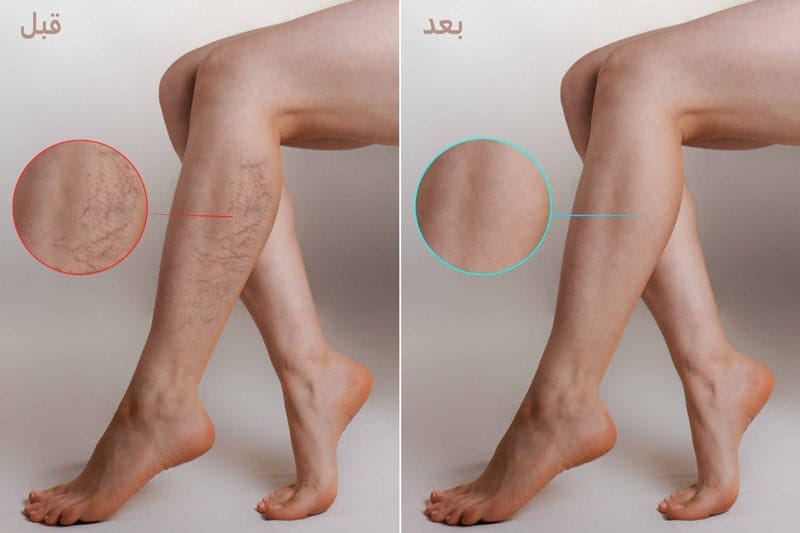
- Spider veins: the dilated blood vessels beneath the skin which usually appear on the face, neck, or legs. They do not involve any pain or problem. So, people intend to treat them for cosmetic purposes.
- Varicose veins: the enlarged veins which are most often observed on the legs. They may occur without an obvious reason. However, they are mostly considered to appear as a result of obesity or during pregnancy, and some other conditions.
- Hemorrhoids: this is one type of varicose veins which occurs in the lower part of rectum and anus.
- Hydrocele: it refers to the condition in which serous fluid is accumulated within the scrotum.
Is Iran a perfect destination to get your sclerotherapy done in?
There are many reasons people may decide to go to Iran: the culture, architecture, weather, and food. But now for healthcare; especially when it has something to do with their beauty.
In recent years, beauty has become a matter of life in Iran. Iranian men and women have shown great interest in undergoing beauty enhancement procedures. This creates a space for both national and international patients to get their treatments done in the hands of some experienced doctors and surgeons.
In Iran, the clinics are more advanced than ever. You can easily find a well-equipped clinic in every corner of the country from the big capital, Tehran to smaller cities like Yazd, Shiraz, Ahwaz, Mashhad, etc.
If you’re still in doubt about your trip in Iran, a look into our international patients’ reviews will give you a better understanding.
How is sclerotherapy performed?
Sclerotherapy is done in a doctor’s office or clinic. The procedure takes less than an hour. It surely requires consultation with a doctor to identify the problematic vein. Anesthesia or any other special sort of preparation is not needed, however.
During the procedure, the patient would lie on their back and have their legs in an elevated position. The doctor would inject the needle to apply the solution which might hurt a little bit.
Sclerotherapy to remove spider veins
What to expect after sclerotherapy?
The patient most probably will be required to wear a pad or compression stockings. He/she will be asked to remain active in order to deter the formation of blood clots.
Also, the patients will be advised to avoid sunlight for a while to be sure that dark spots would not form on the treated area.
Different types of sclerotherapy
There are 4 types of sclerotherapy that may be right for you, depending on your doctor’s recommendation. They are:
Liquid sclerotherapy
This is the one we’ve been talking about from the beginning of this article. When the varicose vein treatment is done using the injection of the liquid sclerosant, the procedure is called “liquid sclerotherapy” or simply “sclerotherapy”.
Microsclerotherapy
For small spider veins, the sclerotherapy is done using tiny needles. This procedure is called microsclerotherapy, and the reason is obvious: the small needle!
The recovery is shorter and involves less discomfort and bruising. However, as it can be inferred, not everyone is an eligible candidate for this sort of treatment. Your doctor can determine whether you need to go with sclerotherapy or its micro version, depending on your condition.
Ultrasound sclerotherapy
In this procedure, the doctor or dermatologist uses ultrasound to see your veins, even those which are hidden. The veins are displayed on a screen and the injection is done for the problematic vein then.
Foam sclerotherapy
Instead of liquid, a foam-like solution is injected into your vein. This type of treatment is beneficial for those with larger varicose or spider veins. The sclerosant is blended with CO2 and air. Then, it’s injected and causes a more considerable contraction compared to regular injection therapy.
SOME ALTERNATIVE TREATMENTS TO SCLEROTHERAPY?
Not every deformed vein is a candidate for this kind of treatment. Sometimes, when there are no specific symptoms, one would have to be on the lookout for certain signs around the site of the treatment. Make sure to monitor the veins to see if they exacerbate in appearance. Alteration of lifestyle could significantly improve the condition of the veins and deter the formation of new varicose veins.
Some other alternative treatments include:
Radiofrequency ablation
In this procedure, the doctor uses radiofrequency energy to treat your twisted veins. This energy damages the vein by increasing the heat. Those who have greater or smaller saphenous veins can benefit from this type of treatment.
Freezing the veins (cryotherapy)
Cryotherapy is one of the effective varicose vein treatments. In this method, a solution is injected into your veins. It significantly reduces the temperature of your vein. The blood vessels are then contracted. So, varicose and spider veins will shrink.
Removing the veins
In severe cases, the vein may be removed through one of the two available minimally invasive procedures: one is Ambulatory phlebectomy and the other is stripping and ligation. In the former, local anesthesia is applied. Then the doctor makes small incisions and removes the veins. The latter, which is more complicated, begins with general anesthesia. After making incisions, the veins are put together using a tie and then removed.
A practical point for your care
Before an operation, the pre-assessment team should review your health, previous tests and all medicines and supplements. Ask for written instructions on medicines, eating, drinking and aftercare that apply to your planned procedure.[1]
Planning treatment in Shiraz
Ask SanaMedTour about the appropriate specialty, appointment arrangements and practical support for your visit. The treating clinician confirms the diagnosis, treatment options, suitability and follow-up after assessment.
Request an itemised written quote identifying the clinician, facility, tests, treatment, medicines, reviews and any accommodation or transfers included.
Sources
[1] NHS: Preparing for surgery — supports the individual-care planning note above. ↑ Back to text
Editorial adaptation: 25 October 2026. General information for planning and discussion; your clinician’s individual instructions take priority.