Read the practical considerations around open rhinoplasty vs. closed rhinoplasty, with individual preparation and recovery decisions confirmed by your treating team.
Key points
- Discuss your individual suitability, alternatives and risks with the treating clinician.
- Ask for written preparation and recovery instructions, including your medicines and follow-up.
- Confirm the healthcare facility, full costs and arrangements before booking travel.
On this page
- Introduction
- What are the pros of open rhinoplasty?
- What are the cons of open rhinoplasty?
- What are the pros of closed rhinoplasty?
- What are the cons of closed rhinoplasty?
- How are open and closed rhinoplasty performed?
- Recovery time for open vs closed rhinoplasty
- Should I have open or closed rhinoplasty?
- A practical point for your care
- Plan your next step
- Sources
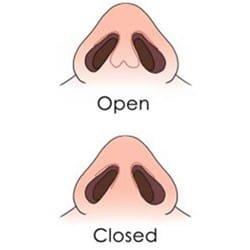
- Open rhinoplasty involves an external incision in the columella, whereas there is no external incision in closed rhinoplasty.
- In open rhinoplasty, the nasal skin is lifted during the operation and the surgeon has ample access to the nasal structure. In closed rhinoplasty, however, the skin is less likely to be lifted, hence the limited visibility and maneuverability.
- Open rhinoplasty is the preferred method for patients who need extensive modification to their nose.
- Closed rhinoplasty is suitable for those who need small changes to their nose and want to heal faster.
- Most surgeons are better at performing rhinoplasty with the open approach, while some may be better at closed rhinoplasty.
- Closed rhinoplasty takes a shorter time than the open approach.
Introduction
People decide to undergo rhinoplasty for different reasons. Some want to correct their deviated septum, which is making their breathing difficult, some just don’t like the small hump of the nasal bridge, and others might want a fundamental transformation.
If you have weighed up everything and made up your mind to go under the knife and get a nose job for whatever reason, chances are you’ve heard the terms ‘open rhinoplasty’ and ‘closed rhinoplasty’ while you were gathering information about the nose job procedure.
Open rhinoplasty and closed rhinoplasty (also known as endonasal rhinoplasty or ‘scarless’ rhinoplasty) are the two main approaches to rhinoplasty. Open and closed rhinoplasty refers to two distinct techniques of operating on a nose.
Closed rhinoplasty was the first method of nose surgery, which is still being widely used by many surgeons. In this procedure, small incisions are made inside the nostrils and the surgeon makes alterations to the nose through the nostrils without lifting back the skin. With the advancement of surgical techniques, however, open rhinoplasty is more widely used nowadays.
Open rhinoplasty vs. closed rhinoplasty
The main difference is that while open rhinoplasty is a type of nose surgery for fixing the functional or aesthetic problems of the nose performed by making an incision on the soft tissue between the nostrils (columella) and lifting back the nasal skin, closed rhinoplasty is performed for the same purpose but with all the incisions made inside the nostrils without the nasal skin being lifted back.
That said, closed and open rhinoplasty methods are different in several other ways and have their own pros and cons. Continue reading to find out the advantages and disadvantages of open and closed rhinoplasty methods and whether you should go for the former or the latter.
What are the pros of open rhinoplasty?
Open rhinoplasty has some advantages over the closed approach, which are as follows:
- Since the nasal structure is completely revealed, the surgeon has better access to the underlying structure and thus more freedom to reshape the nose as the patient desires.
- The stabilization of the nose after surgery is easier in open rhinoplasty than closed rhinoplasty.
- Most surgeons practice open rhinoplasty. Therefore, your chance to find a good surgeon for open rhinoplasty is greater.
What are the cons of open rhinoplasty?
The main drawbacks of open rhinoplasty are as follows:
- Open rhinoplasty is lengthier and more invasive than closed rhinoplasty, so the recovery time will be a little longer and it takes more time for the swelling and bruising to disappear.
- A very small scar might remain on your nasal columella, though only visible when you tilt your head back.
What are the pros of closed rhinoplasty?
- Closed rhinoplasty procedure takes a shorter time to be completed that open rhinoplasty does.
What are the cons of closed rhinoplasty?
- As there is limited visibility of the tissues and cartilage, the surgeon can make limited changes, with less delicacy.
- There are fewer surgeons who are skillful at closed rhinoplasty than open rhinoplasty.
- Incisions made in the nose weaken the nasal structure, undermining the stability of the shape of the nose in the future.
- There is a higher chance of nasal cartilage distortion during the operation as accessing the nasal framework requires intense stretching of the skin.
Surgery + Hotel + Visa
Transfer + Interpreter
How are open and closed rhinoplasty performed?
Before starting the operation, the surgical team administer anesthetic medications, which can be local or general depending on the surgeon’s recommendation. After the patient is put to sleep or the surgical site is numbed, the surgeon begins the surgery.
Simply put, in open rhinoplasty the surgeon makes a small external incision (called trans-columellar incision) outside the nose at the base of the columella (the soft bridge separating the nostrils). The surgeon then gently raises the skin of the nose, allowing easy access to the bony structure and cartilage of the nose for the operation.
After making the necessary changes to the nasal structure the surgeon closes the incision with sutures. Splints and gauze bandage will be applied in most cases, which should remain in place for a few days.
All the steps in performing closed rhinoplasty are the same as those in open rhinoplasty except that the incision is made inside the nose and the sutures used for closing the incision are absorbable (dissolvable), that is they will gradually dissolve on their own and won’t require removal. Also, the procedure takes a shorter time compared to open rhinoplasty.
Note: If the patient seeks smaller nasal wings or an asymmetry correction, a closed technique might be coupled with a separate incision around the nasal wings.
Recovery time for open vs closed rhinoplasty
Since closed nose surgery is less invasive than the open method, there will be less swelling and bruising after this surgery and the nose will heal faster. There might even be no bruising after closed rhinoplasty in some patients. Therefore, the recovery time in closed rhinoplasty is shorter than in open rhinoplasty and patients usually need a shorter time to be able to return to their normal life.
You May Like to See Before & After Photos of Rhinoplasty
Should I have open or closed rhinoplasty?
As said above, open and closed rhinoplasty have their own advantages and disadvantages. With that in mind, depending on each individual’s circumstances and desired results, one of the methods is more suitable than the other.
Moreover, the skill of the surgeon in each of the techniques is a defining factor in going for one of them. During the pre-op consultation with your surgeon, all issues will be discussed and the best method for surgery will be decided.
In general, open rhinoplasty is suitable for any type of nose as there will be no limitation for the surgeon to operate on the nose. Open rhinoplasty is suitable for you if you want to get the size of your nose changed, have your dorsal hump removed, or get your nasal tip corrected. The open approach is especially good for those who are having a revision rhinoplasty.
On the other hand, those who want a small change to the nose, especially to the nasal bridge rather than the tip, and at the same time want to recover quickly with the least possible downtime, are good candidates for closed rhinoplasty, in particular, those that have quite straightforward nasal anatomy.
Meanwhile, open rhinoplasty has completely made great changes in treating complex nasal deformities including cleft-lip rhinoplasty, or severe post-rhinoplasty deformities.
It should be noted that many rhinoplasty experts believe that open rhinoplasty is the most suitable choice for difficult nasal anatomy of any type.
A practical point for your care
Before an operation, the pre-assessment team should review your health, previous tests and all medicines and supplements. Ask for written instructions on medicines, eating, drinking and aftercare that apply to your planned procedure.[1]
Plan your next step
Read the patient travel guides · Contact SanaMedTour
Sources
[1] NHS: Preparing for surgery — supports the individual-care planning note above. ↑ Back to text
Editorial adaptation: 25 October 2026. General information for planning and discussion; your clinician’s individual instructions take priority.