Read the practical considerations around how much weight can i lose with liposuction?, with individual preparation and recovery decisions confirmed by your treating team.
Key points
- Discuss your individual suitability, alternatives and risks with the treating clinician.
- Ask for written preparation and recovery instructions, including your medicines and follow-up.
- Confirm the healthcare facility, full costs and arrangements before booking travel.
On this page
As lifestyles have changed during the past decades to become less active and more sedentary — accompanied by increased consumption of high-calorie food — more and more people now have to deal with excess weight and stubborn fat deposits that don’t want to leave their body as easily as they came.
If you’ve been having a hard time trying to burn the unwanted fat on your out-of-shape body through workouts and dieting, you must know how difficult it is to lose each and every pound.
For those of you who don’t have the time — and determination — to burn the stubborn fat around the waistline, there is the option of liposuction, a surgical procedure that takes an hour or two to rid you of the fat that’s been lodged in there for some time.
What is liposuction and how it works?
Liposuction, also known as lipectomy and lipoplasty, or simply lipo, is a cosmetic procedure intended to remove local fat on specific areas of the body to improve the shape and contour of the body.
The procedure is commonly performed to remove fat deposits on the abdomen, thighs, hips, love handles (flanks), back, and neck. A surgeon makes a small incision in the body to insert a thin tube called cannula and suction out the fat with the help of a suction machine to which the cannula is connected. Liposuction is done under either local or general anesthesia.
There are different types of liposuction techniques, which differ in terms of the method of treating the fat before removing it. Different liposuction methods are as follows:
- Tumescent liposuction: This is the most common type of liposuction in which a sterile solution consisting of salt water, anesthetic (lidocaine), and a drug called epinephrine, is injected in the target areas to swell and stiffen the area, and thus making it easy to remove the fat.
- Ultrasound-assisted liposuction (UAL): this liposuction technique makes use of ultrasonic energy to dislodge fat cells from their walls, making them easier to be suctioned. A new generation of this technique is called VASER
- Laser-assisted liposuction (SmartLipo): This minimally-invasive method employs high-intensity laser beams to break down fat cells before suction. It is best suited for small fat pockets and areas that need to have a tightened skin after the procedure.
- Power-assisted liposuction: In this liposuction technique, a vibrating cannula that moves back and forth is used and is suitable for people who need to get a larger amount of fat removed.
- Also Read: Guide to fast recovery after liposuction
Surgery + Hotel + Visa
Transfer + Interpreter
Is liposuction a weight loss surgery?
As a company that facilitates medical tourism for people who want to undergo liposuction, and other procedures, in Iran, we are often asked: “how much weight will I lose after liposuction?”
Liposuction is aimed at sculpting the body to give it a more toned appearance. It does this by removing fat pockets that have deformed the shape of the body. Liposuction is a purely aesthetic procedure.
While the amount of fat removed in a liposuction procedure depends on your body and the extent of fat accumulation, no more than a certain amount of fat can be safely removed, without putting the patient at risk.
It is important to note that good liposuction candidates are people who are at or near normal weight. Therefore, extremely overweight or obese people are not eligible for this procedure.
- Also Read: Liposuction vs. Tummy Tuck: Which One Is Right for You?
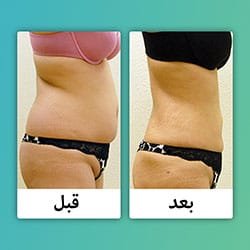
You May Like to See Before & After Photos of Liposuction
Last word
Although liposuction can greatly improve the appearance of your body by removing unwanted fat deposits, you should not look at it as a weight loss method. Liposuction is a cosmetic procedure and can’t help you with weight-related conditions.
- Also Read: How to get rid of lumps after liposuction?
- Also Read: How to reduce swelling after liposuction?
Share this article:
Let’s Take a Look at Our Plastic Surgery Patients’ Testimonial Videos
Feel free to express your opinions or ask your questions regarding the article
A practical point for your care
Before an operation, the pre-assessment team should review your health, previous tests and all medicines and supplements. Ask for written instructions on medicines, eating, drinking and aftercare that apply to your planned procedure.[1]
Plan your next step
Read the patient travel guides · Contact SanaMedTour
Sources
[1] NHS: Preparing for surgery — supports the individual-care planning note above. ↑ Back to text
Editorial adaptation: 25 October 2026. General information for planning and discussion; your clinician’s individual instructions take priority.